
10 Common Beginner Mistakes in Padel
LEARN
4/15/20264 min read
10 Common Beginner Mistakes in Padel (And How to Fix Them)
Starting padel is exciting. The game is social, fast-paced, and easier to learn than many racket sports — which is exactly why so many new players fall in love with it quickly.
But beginners also tend to repeat the same early mistakes. These habits can slow your improvement and make matches feel harder than they should.
The good news? Most of these mistakes are easy to fix once you recognise them.
In this guide, we’ll break down the 10 most common beginner mistakes in padel — and how to correct them quickly so you can improve faster and enjoy the game more.
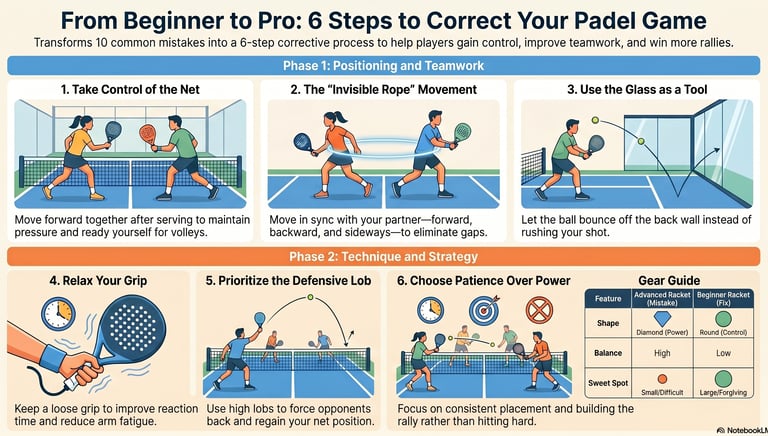
1. Holding the Racket Too Tightly
One of the most common beginner habits is gripping the racket too hard.
A tight grip reduces control, slows reactions at the net, and increases arm fatigue during longer matches.
How to fix it
Use a relaxed grip during rallies and tighten slightly only when hitting the ball.
A good rule:
Hold the racket firm enough to control it, but relaxed enough to react quickly.
If your arm feels tired after short sessions, your grip is probably too tight.
2. Standing Too Far Back on Court
New players often stay near the back glass because it feels safer.
In padel, however, the net position wins points.
Teams controlling the net usually control the match.
How to fix it
After serving or returning serve:
Move forward with your partner together
Maintain net pressure
Stay ready for volleys
If you’re unsure where to stand, our guide on Left Side vs Right Side in Padel explains positioning in more detail.
3. Trying to Hit Too Hard
Padel is not about power.
Beginners often try to finish points quickly with strong shots instead of building rallies.
This usually leads to unforced errors.
How to fix it
Focus on:
Consistency
Placement
Height over the net
Controlled shots win more points than aggressive ones at beginner level.
4. Avoiding the Glass Walls
Many new players treat the glass like an obstacle instead of a tool.
Learning to use the walls is one of the biggest steps in improving at padel.
How to fix it
Let the ball bounce off the back glass when needed instead of rushing forward.
Practise:
Back-wall rebounds
Defensive lobs
Controlled resets
Understanding wall play transforms your defensive game.
You can learn more in our Padel Techniques & Shots Guide.
5. Standing Too Close to Your Partner
Court spacing matters more than beginners realise.
Standing too close reduces coverage and creates easy winning angles for opponents.
How to fix it
Maintain a consistent distance between partners.
Think of the court as divided into two halves:
Each player protects their side while moving together forward and backward.
Good teamwork improves quickly with communication.
6. Forgetting to Use the Lob
The lob is the most important defensive shot in padel.
Beginners often play low defensive returns instead of lifting the ball over opponents.
This makes it difficult to regain court position.
How to fix it
Use the lob when:
Opponents control the net
You’re under pressure
You need time to recover positioning
A good lob resets the rally and gives your team control again.
7. Poor Serve Positioning
Many beginners focus only on getting the serve in.
But positioning after the serve matters just as much.
How to fix it
After serving:
Move forward immediately
Join your partner at the net
Prepare for the return volley
Padel rewards players who take net control early in the rally.
If you’re still learning the basics, see our Padel Rules Explained (Simple & Clear) guide.
8. Using the Wrong Racket for Your Level
Beginner players sometimes choose advanced rackets that are too powerful or difficult to control.
This makes learning technique harder.
How to fix it
Look for rackets with:
Round shape
Low balance
Large sweet spot
These provide better control and forgiveness while learning.
Our Best Padel Racket for Beginners guide explains what to look for in more detail.
9. Not Moving as a Team
Padel is a doubles sport first and foremost.
Beginners often move individually instead of working as a pair.
This creates gaps in court coverage.
How to fix it
Move together:
Forward together
Backward together
Sideways together
Think of your team as connected by an invisible rope.
Strong positioning improves instantly when partners move in sync.
10. Rushing Shots Instead of Staying Patient
Patience is one of the biggest differences between beginners and experienced players.
New players often try to finish points too early.
Experienced players wait for the right opportunity.
How to fix it
Focus on:
Keeping the ball in play
Forcing opponent mistakes
Building the rally gradually
Consistency wins matches at beginner level.
How Quickly Can You Fix These Mistakes?
The good news is most beginner mistakes disappear naturally with experience and awareness.
Players usually improve fastest when they focus on:
Court positioning
Using the lob
Controlling rallies instead of rushing winners
Learning to use the glass
Even small adjustments can make a big difference within a few sessions.
Final Thoughts: Small Changes Make a Big Difference
Every padel player starts somewhere.
Making these corrections early helps you improve faster, enjoy matches more, and develop stronger habits from the start.
Remember:
Padel rewards positioning, teamwork, patience, and smart shot selection far more than power.
If you focus on avoiding these common mistakes, you’ll quickly feel more confident on court — and start winning more rallies along the way.
Recommended for you
Best Padel Racket for Beginners


