
How to Play the Vibora
LEARN
5/23/20264 min read
How to Play the Vibora in Padel
The vibora is one of the most advanced and effective attacking shots in padel. It combines spin, control, and aggression to keep opponents under pressure while allowing you to maintain net position.
Many beginners mistake the vibora for simply a hard smash, but the shot is actually much more tactical. A good vibora is designed to force weak defensive returns rather than end the point immediately.
In this guide, we’ll explain what the vibora is, when to use it, how to hit it correctly, and the most common mistakes players make when learning it.
What Is the Vibora?
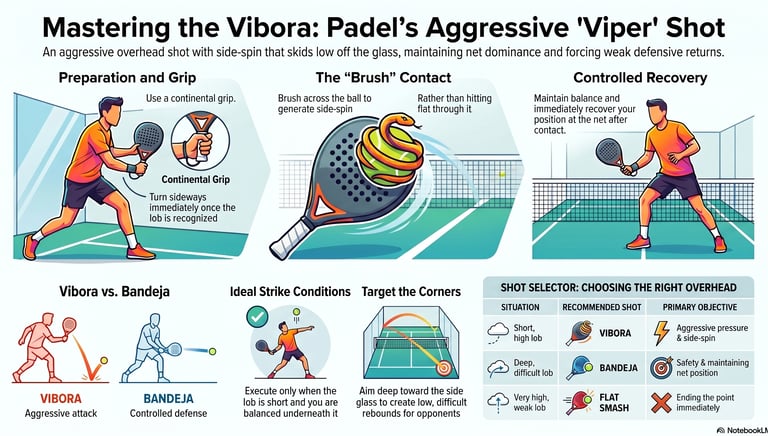
The vibora is an overhead shot hit with slice and side spin after an opponent’s lob. The word “vibora” means “viper” in Spanish, which reflects the way the ball skids and moves after bouncing.
Unlike a flat smash, the vibora focuses more on:
spin
placement
maintaining attack
creating difficult rebounds
The shot is commonly used by intermediate and advanced players who want to apply pressure without taking unnecessary risks.
Vibora vs Bandeja
The vibora and bandeja are closely related shots, but they serve different purposes.
The bandeja is slower, safer, and more control-focused. It’s mainly used to maintain net position when the lob is difficult to attack aggressively.
The vibora is faster and more aggressive. It uses more side spin and aims to force weaker returns from opponents.
Think of it like this:
Bandeja = controlled defence while staying at the net
Vibora = controlled attack while staying at the net
To learn more on the Bandeja, read our How to play the Bandeja guide
When Should You Use the Vibora?
The vibora works best when:
the lob is slightly shorter
you have time to prepare
you’re balanced underneath the ball
your opponents are defending deep
If the lob is too deep or pushes you too far backwards, a bandeja is usually the safer option.
Trying to force a vibora from poor positioning often leads to mistakes and loss of net control.
Grip and Preparation
The vibora is normally played using a continental grip, which is also used for volleys and overheads.
Preparation is one of the most important parts of the shot. As soon as you recognise the lob:
turn sideways
move behind the ball
keep the racket high
Good footwork makes the shot significantly easier and improves timing.
How to Hit the Vibora
The vibora combines overhead mechanics with slice and side spin.
Stay side-on during the preparation phase and avoid opening your body too early. The swing should feel controlled rather than wild or rushed.
Instead of hitting flat through the ball, brush slightly across it to generate slice and side spin. This creates the low, awkward bounce that makes the shot difficult to defend.
The objective is not maximum power. A controlled vibora with good placement is far more effective than an uncontrolled smash.
After contact, recover quickly back into net position and prepare for the next shot.
Where Should You Aim?
A good vibora is usually aimed:
deep towards the corners
towards the side glass
low after the bounce
The ideal result is often a weak defensive return rather than an outright winner.
Players who use the vibora well build pressure gradually until opponents make mistakes.
Common Beginner Mistakes
One of the biggest mistakes is trying to hit the vibora too hard. Players often rush the shot and lose control, balance, and recovery position.
Another common issue is poor footwork. Moving backwards late or staying square to the ball makes it difficult to generate proper spin and timing.
Many players also overuse their wrist, which reduces consistency. The spin should come from the racket path and body rotation rather than excessive wrist flicking.
Finally, some players admire the shot instead of recovering forward. The purpose of the vibora is to maintain attacking court position, so recovery is essential.
How to Practise the Vibora
The best way to improve the vibora is repetition with controlled lobs.
Start slowly and focus on:
preparation
balance
spin
consistency
Don’t worry about power early on. Learning clean contact and proper placement is much more important.
Practising recovery after every shot is also key, since the vibora is designed to help you stay dominant at the net.
Why the Vibora Matters
The vibora is an important step in progressing from beginner to intermediate padel because it teaches:
tactical aggression
overhead control
patience
spin variation
net dominance
Players who master the vibora become much harder to defend against because they can maintain pressure without relying purely on power.
Final Thoughts
The vibora is one of the most effective attacking shots in padel when used correctly. It combines spin, control, and pressure while helping players maintain net position.
Rather than trying to hit winners constantly, strong padel players use the vibora to build pressure and force mistakes over time.
Focus on:
early preparation
controlled swing speed
spin generation
recovery positioning
and your vibora will improve naturally as your game develops.
Recommended for you
Best Padel Racket for Beginners


