
How to Play the Bandeja
LEARN
5/11/20264 min read
How to Play the Bandeja
The bandeja is one of the most important shots in padel — and one of the biggest differences between beginner and intermediate players.
At first glance, many players think the bandeja is simply a softer smash. In reality, it’s a highly tactical overhead shot designed to help you keep control of the net while putting pressure on your opponents.
Mastering the bandeja improves:
court positioning
defensive recovery
overhead consistency
patience in rallies
net control
In this guide, we’ll explain exactly what the bandeja is, when to use it, how to hit it properly, and the most common mistakes players make when learning it.
What Is a Bandeja in Padel?
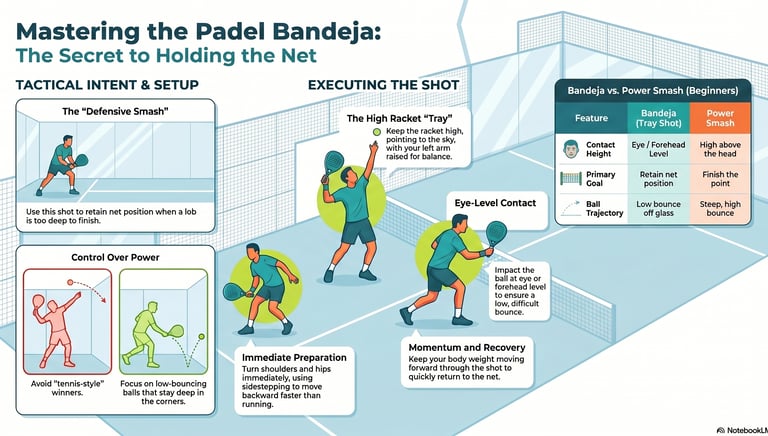
The bandeja is a controlled overhead shot hit after an opponent’s lob.
Unlike a smash, the objective is usually not to win the point immediately.
Instead, the bandeja is used to:
maintain net position
keep opponents under pressure
avoid being pushed to the back of the court
create weaker defensive returns
The word “bandeja” means “tray” in Spanish, which refers to the racket position used during the shot.
The bandeja is typically hit with:
slice/spin
controlled pace
height and depth
It’s one of the core tactical shots in modern padel.
Why the Bandeja Is So Important
Beginners often try to smash every lob aggressively.
The problem?
Not every lob is easy enough to attack.
Trying to hit winners from difficult overhead positions usually leads to:
mistakes
loss of net position
rushed footwork
poor recovery
The bandeja solves this problem.
Instead of over-attacking, the bandeja allows you to:
stay balanced
recover quickly
continue controlling the rally
This is why intermediate and advanced players rely on it constantly.
When Should You Use a Bandeja?
The bandeja is best used when:
the lob pushes you slightly backwards
the ball is too difficult to smash aggressively
you want to maintain net control
opponents are defending deep
Think of it as a “control overhead” rather than a power shot.
A good rule:
Smash easy balls.
Bandeja difficult lobs.
How to Position Yourself for the Bandeja
Footwork is one of the most important parts of the shot.
Many beginners move backwards awkwardly and lose balance before contact.
Correct movement pattern:
Turn sideways immediately
Move back using crossover or side steps
Keep the racket high
Stay balanced underneath the ball
Contact the ball slightly in front of you
The earlier you prepare, the easier the shot becomes.
Good players make the bandeja look effortless because their positioning is efficient.
The Correct Grip for a Bandeja
The bandeja is normally played using a continental grip.
This is the standard grip used for:
volleys
serves
overheads
The continental grip allows:
easier slice generation
smoother racket angle control
better transition between shots
Many beginners accidentally switch grips during rallies, which makes overheads inconsistent.
How to Hit the Bandeja
The technique is compact and controlled.
Step-by-step technique:
1. Prepare Early
As soon as you recognise the lob:
turn your shoulders
lift the racket high
track the ball early
Preparation is critical.
2. Stay Side-On
Keep your body turned sideways rather than facing the net directly.
This improves:
balance
control
racket path
3. Use a Compact Swing
The bandeja is not a huge overhead smash.
Use:
shorter motion
controlled acceleration
relaxed swing speed
The goal is precision, not maximum power.
4. Apply Slice
The bandeja usually includes slice/spin.
This helps:
keep the ball low after the bounce
slow the opponent’s counterattack
maintain pressure
The slice is created by brushing slightly down the back of the ball during contact.
5. Recover Forward Quickly
After the shot:
move forward again
recover net position
prepare for the next ball
This is one of the biggest reasons the bandeja is so effective tactically.
Where Should You Aim the Bandeja?
A strong bandeja is usually hit:
deep into the corners
towards the side glass
low after the bounce
The objective is to force opponents into difficult defensive shots.
Avoid:
central easy balls
overhitting
aiming too close to the glass early on
Consistency matters more than perfection.
Common Beginner Mistakes
Trying to Hit Too Hard
This is the biggest mistake.
The bandeja is about:
control
positioning
pressure
Not power.
Overhitting usually causes:
missed shots
poor recovery
loss of balance
Poor Footwork
Many players backpedal directly backwards.
Instead:
turn sideways early
use controlled movement
get behind the ball properly
Good positioning makes the shot much easier.
Swinging Too Big
Large swings reduce consistency.
The bandeja should feel:
compact
smooth
controlled
Forgetting Recovery Position
Some players admire the shot instead of recovering.
The entire purpose of the bandeja is to:
keep the net.
Recovery is essential.
Bandeja vs Vibora: What’s the Difference?
These shots are often confused.
Bandeja
safer
slower
more controlled
defensive-to-attacking transition shot
Vibora
faster
more aggressive
more side spin
used to pressure opponents harder
The bandeja is usually learned first because it’s safer and more fundamental.
How to Practise the Bandeja
The best way to improve is repetition with controlled lobs.
Simple training ideas:
partner feeds lobs repeatedly
focus on recovery after each shot
prioritise consistency over speed
aim deep cross-court
Don’t worry about making the shot flashy.
Even advanced players rely on simple, consistent bandejas.
Why the Bandeja Helps Players Improve Quickly
Learning the bandeja develops:
patience
overhead control
positioning
tactical awareness
It teaches players that padel is not about hitting harder.
It’s about:
building pressure
controlling space
maintaining good court position
This mindset shift is what usually separates beginners from stronger club players.
Final Thoughts
The bandeja is one of the most valuable shots in padel because it helps players control rallies without unnecessary risk.
While beginners often focus on smashes, experienced players understand that smart overhead play wins more matches than reckless power.
If you can learn to:
stay balanced
recover quickly
use controlled slice
maintain net position
your overall level will improve dramatically.
Mastering the bandeja takes time — but once it clicks, your game changes completely.
Recommended for you
Best Padel Racket for Beginners


