
Why is Padel Becoming So Popular?
LEARN
12/2/20255 min read


Why Is Padel Becoming So Popular? The Rise of the World’s Fastest-Growing Sport
Padel is rapidly becoming one of the most popular sports in the world, with explosive growth across Europe, the UK, and beyond. Combining elements of tennis and squash, padel is easier to learn, highly social, and accessible to players of all ages and fitness levels. From beginners picking up a racket for the first time to elite athletes and celebrities embracing the sport, padel’s rise shows no signs of slowing down.
But why is padel becoming so popular, and what makes it different from traditional racket sports? The answer lies in its unique blend of accessibility, social appeal, health benefits, and modern lifestyle fit.
The History of Padel and Its Global Rise
Padel was invented in 1969 in Acapulco, Mexico, by Enrique Corcuera, who built the first enclosed court at his home. The smaller court size and use of surrounding walls created a new style of play that was dynamic, tactical, and easy to enjoy.
The sport gained momentum in Spain during the 1970s, where it quickly evolved from a niche pastime into a mainstream recreational sport. By the early 1990s, padel had become firmly established, with the creation of the Royal Spanish Padel Federation and the International Padel Federation (FIP), which helped standardise rules and promote international competition.
From Spain, padel spread rapidly to countries such as Argentina, Italy, Sweden, and more recently the UK. Today, padel is widely recognised as one of the fastest-growing sports globally, with thousands of new courts built each year.
Why Padel Is So Easy to Learn and Accessible
One of the biggest reasons padel is becoming so popular is its accessibility for beginners.
Smaller courts, faster progress
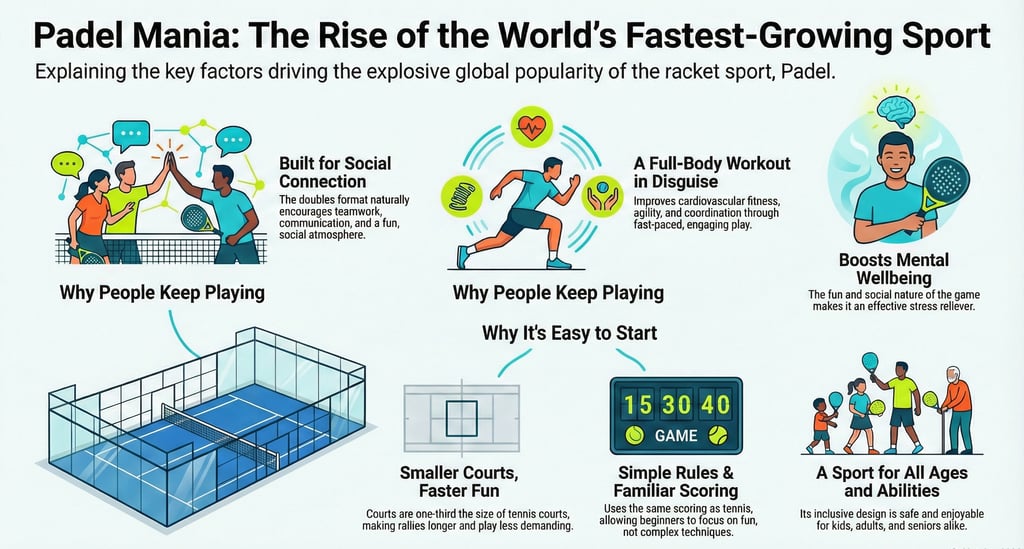
Padel courts are roughly one-third the size of a tennis court, making them easier to cover and less physically demanding. This allows new players to enjoy longer rallies and competitive games almost immediately, without requiring advanced technique or elite fitness.
Simple rules and familiar scoring
Padel uses the same scoring system as tennis, but with fewer complex technical demands. Players can focus on enjoying the game rather than mastering difficult serves or strokes, making it ideal for casual and social play.
Suitable for all ages and abilities
Padel is genuinely inclusive. It can be played by children, adults, and older players alike, with minimal risk of overuse injuries compared to some high-impact sports. This broad appeal is a major factor in its rapid adoption worldwide.
The Social Appeal of Padel and Club Culture
Padel is typically played as doubles, which naturally makes it a more social sport than singles-based activities.
Built for connection
Playing in pairs encourages communication, teamwork, and interaction. Matches feel more like social events than intense competitions, which is why padel is often described as “addictive” by new players.
Thriving club environments
Modern padel clubs focus heavily on community. Many offer beginner sessions, social leagues, mixed-ability games, and events designed to make newcomers feel welcome. This welcoming atmosphere removes the intimidation often associated with traditional sports like tennis or squash.
Popular with families and groups
Because padel is easy to learn and fun from the first session, it’s increasingly popular among families, friends, and workplace groups looking for a shared activity.
Health Benefits of Playing Padel
Beyond its social appeal, padel offers a wide range of physical and mental health benefits.
Improves cardiovascular fitness
The fast-paced nature of padel involves short bursts of movement, lateral agility, and constant engagement, helping to improve heart health and stamina.
Enhances coordination and balance
Padel requires quick reactions and precise racket control, improving hand-eye coordination, balance, and overall agility. These skills often translate into improved performance in other sports and daily activities.
Supports mental wellbeing
The social interaction and enjoyable nature of padel make it an effective stress reliever. Playing regularly can boost mood, reduce anxiety, and encourage consistency in physical activity — something many people struggle to maintain with traditional gym workouts.
Why Padel Is Growing Rapidly in the UK
In recent years, padel has seen significant growth across the UK. New courts are opening in cities, leisure centres, and private clubs, driven by increasing demand and limited availability of alternative racket sports facilities.
Padel’s smaller court size makes it ideal for urban environments where space is at a premium. Combined with strong interest from former tennis players, fitness enthusiasts, and social players, the sport is quickly establishing itself as a mainstream option rather than a niche alternative.
The Future of Padel: Trends and Predictions
The future of padel looks exceptionally strong.
Professional leagues and media exposure
Tours such as the World Padel Tour have helped raise the sport’s profile globally, attracting sponsorships, media coverage, and elite athletes. This professionalisation is accelerating participation at grassroots level.
Increased investment in facilities
As demand continues to grow, investment in padel courts and clubs is rising. This expansion will make the sport more accessible and encourage long-term participation.
Potential Olympic inclusion
While not yet an Olympic sport, padel’s rapid international growth makes future inclusion a realistic ambition. Olympic recognition would further cement padel’s status as a global sport.
Frequently Asked Questions About Padel
Why is padel becoming so popular?
Padel is becoming popular because it is easy to learn, highly social, accessible to all ages, and offers strong health benefits. Its smaller courts and doubles format make it enjoyable from the first session.
Is padel easier than tennis?
Yes. Most beginners find padel easier than tennis due to the smaller court, simpler technique, and longer rallies. Players can enjoy competitive games much sooner.
Is padel good for fitness?
Padel provides excellent cardiovascular exercise, improves coordination and agility, and supports mental wellbeing. It offers a fun alternative to traditional workouts.
Why is padel growing so fast in Europe and the UK?
Strong club culture, urban-friendly courts, celebrity endorsement, and increased media exposure have all contributed to padel’s rapid growth across Europe and the UK.
Can beginners play padel?
Absolutely. Padel is one of the most beginner-friendly racket sports and is designed to be enjoyable regardless of experience or fitness level.
Recommended for you
Best Padel Racket for Beginners


