
Padel vs Tennis
LEARN
2/8/20264 min read
Padel vs Tennis: Key Differences Explained
Padel and tennis are often compared because they share similar scoring systems, rackets, and court layouts. However, once you step onto the court, the two sports feel very different. From court design and equipment to strategy and playing style, padel offers a unique experience that has helped drive its explosive global growth.
Whether you’re deciding which sport to try or simply curious about how they compare, this guide explains the key differences between padel and tennis.
Court Size and Layout
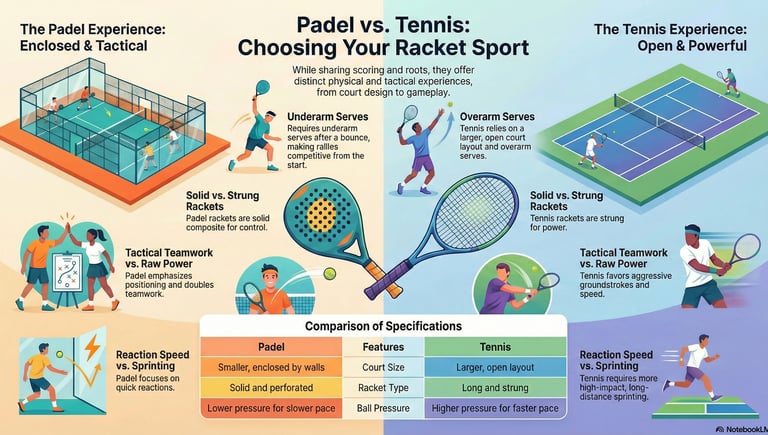
One of the biggest differences between padel and tennis is the court itself. A tennis court is significantly larger and designed for singles or doubles play, while a padel court is smaller and enclosed by glass walls and metal fencing that are part of the game.
Because the walls are in play, rallies in padel often last longer. Players can rebound the ball off the glass to continue points, creating a more tactical and defensive style of play. Understanding how the walls work is essential for beginners, which is explained in our padel techniques and shots guide.
The smaller court also makes padel easier to pick up quickly, as players do not need to cover as much ground compared to tennis.
Equipment Differences
Padel rackets and tennis rackets look very different. Tennis rackets are strung and typically longer, allowing players to generate more power and reach. Padel rackets are solid, perforated rackets made from composite materials such as carbon fibre or fibreglass, and they are designed to prioritise control over power.
Balls are similar but not identical. Padel balls have slightly lower pressure than tennis balls, which slows the pace of rallies and improves control.
For beginners, equipment choice can make a significant difference in how quickly they improve. If you’re new to the sport, you can explore our best padel rackets for beginners guide to find forgiving, easy-to-use options designed to help new players build confidence.
Playing Style and Strategy
Tennis is often more power-driven, particularly at competitive levels, where strong serves and aggressive groundstrokes can dominate points. Padel, in contrast, is far more tactical. Patience, positioning, teamwork, and shot placement play a greater role than raw power.
Because padel is always played in doubles, teamwork is fundamental. Players must move together, communicate effectively, and maintain coordinated positioning at the net and baseline. Strategy becomes just as important as technique, especially when deciding when to attack and when to defend.
Serves and Point Construction
Serving is another major difference between the two sports. In tennis, serves are often a major attacking weapon, with players aiming for speed, spin, and precision to win easy points. In padel, serves must be hit underarm after the ball bounces, which removes much of the power advantage and keeps rallies competitive from the start.
Because serves are less dominant in padel, point construction becomes more important. Players rely on building rallies, creating angles, and using lobs to gain net position rather than trying to end points immediately. This slower, more strategic pace is one of the main reasons many beginners find padel easier and more enjoyable early on.
Learning Curve and Accessibility
One of the main reasons padel has grown so quickly worldwide is its accessibility. Beginners can often sustain rallies within their first session, whereas tennis can take longer to master due to the larger court, faster pace, and technical serving motion.
The forgiving nature of padel equipment also contributes to the easier learning curve. Choosing the right racket can accelerate improvement, and our guide on how to choose your first padel racket explains the key factors such as racket shape, weight, and balance that beginners should consider.
Because rallies last longer and the court is smaller, padel is often considered more social and beginner-friendly, making it particularly popular for casual and club-level play.
Fitness and Physical Demands
Both sports provide excellent cardiovascular exercise, but the physical demands differ slightly. Tennis requires more sprinting over longer distances, particularly in singles matches, and often involves higher-impact movements. Padel, while still physically demanding, focuses more on short bursts of movement, quick reactions, and positional awareness.
The enclosed court and doubles format reduce the need for long-distance running, which can make padel more accessible to players of varying fitness levels while still offering a challenging workout.
Cost and Availability
Another factor driving the growth of padel is accessibility in terms of cost and court availability. Many clubs can fit multiple padel courts into the space required for a single tennis court, making it easier for facilities to expand capacity. Equipment costs are also often lower for beginners, especially when starting with entry-level rackets.
As the sport continues to grow across the UK and Europe, more clubs are adding padel courts alongside traditional tennis facilities, giving players the opportunity to try both sports.
Which Sport Is Right for You?
Choosing between padel and tennis ultimately depends on what you enjoy most. Tennis may appeal more to players who prefer singles competition, powerful serving, and larger court coverage. Padel is ideal for players who enjoy doubles play, tactical rallies, and a social club atmosphere.
Many athletes end up playing both sports, as the skills can complement each other. Tennis players often adapt quickly to padel once they learn how to use the walls, while padel players can benefit from the technical discipline developed in tennis.
Final Thoughts
While padel and tennis share some similarities, they offer very different playing experiences. Tennis emphasises power, reach, and individual performance, whereas padel focuses on control, teamwork, and strategic positioning. The smaller court, enclosed walls, and beginner-friendly learning curve have helped make padel one of the fastest-growing sports in the world.
If you’re considering trying padel for the first time, starting with the right equipment and understanding the basics of technique and positioning will make the transition much smoother. The internal guides linked throughout this article will help you choose the right racket, understand key techniques, and develop the strategy needed to enjoy the sport from day one.
Recommended for you
Best Padel Racket for Beginners


