
Padel Equipment Guide: Everything You Need to Play
LEARN
12/3/20253 min read


Padel is one of the fastest-growing sports in the world, and one of the reasons for its popularity is how easy it is to get started. But if you’re new to the game, it’s natural to wonder: what equipment do you actually need to play padel?
This complete padel equipment guide breaks down everything you need to get on court, from rackets and balls to shoes, clothing and useful accessories. Whether you’re playing your first match or upgrading your setup, this guide will help you make informed choices without overcomplicating things.
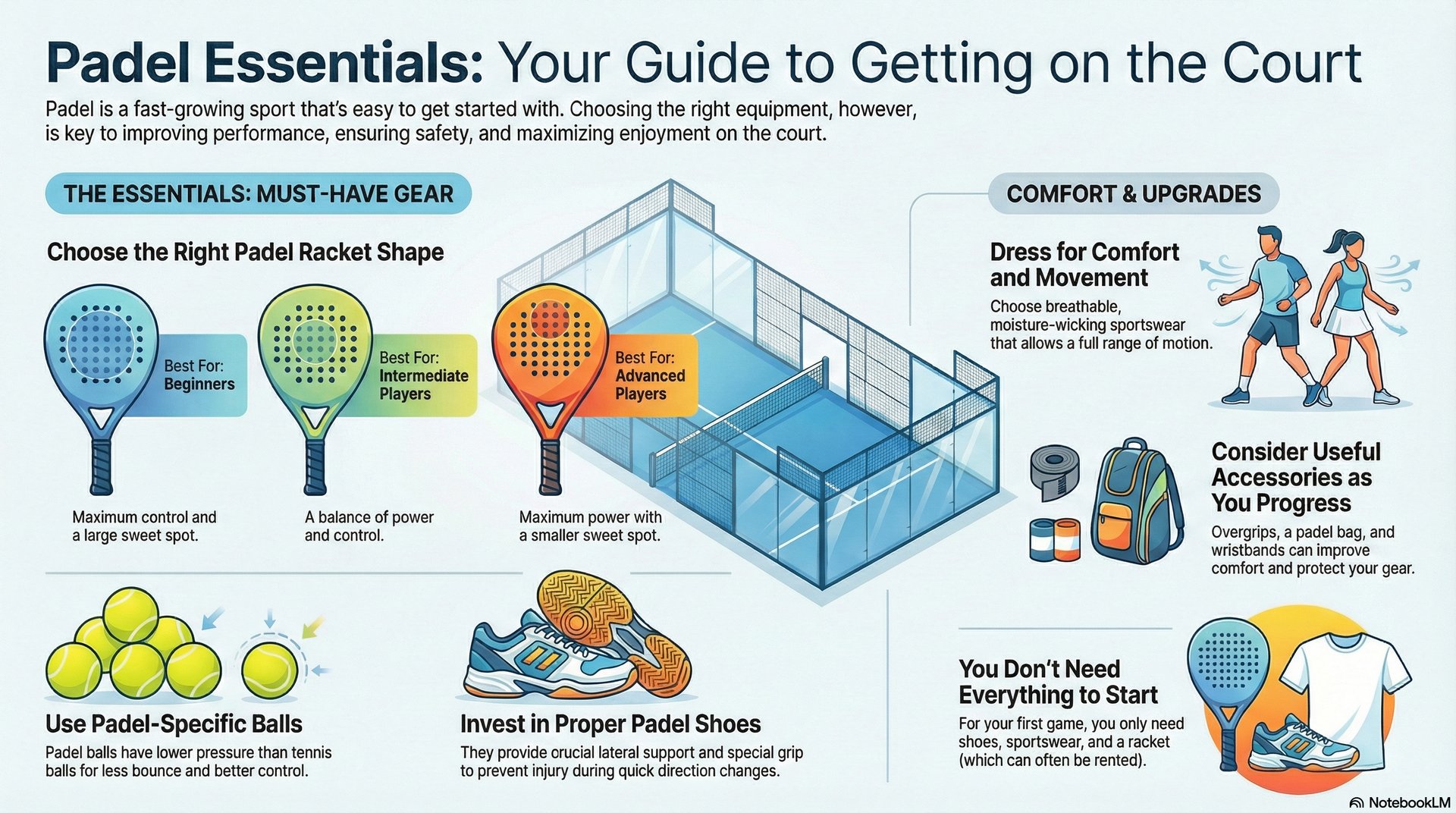
Essential Padel Equipment at a Glance
To play padel, you’ll need:
A padel racket
Padel balls
Proper padel shoes
Comfortable sports clothing
Optional accessories like grips and bags
Let’s look at each in more detail.
Padel Rackets
The most important piece of padel equipment is the racket. Unlike tennis rackets, padel rackets are solid (no strings) and designed specifically for the smaller court and use of walls.
Racket Shapes
Padel rackets come in three main shapes, each affecting control and power:
Round – Maximum control, large sweet spot, ideal for beginners
Teardrop – Balanced control and power, great for intermediate players
Diamond – Maximum power, smaller sweet spot, suited to advanced players
Balance & Weight
Head-light rackets offer more control and manoeuvrability
Head-heavy rackets generate more power but require better technique
Most players use rackets weighing between 355g and 375g, including grip.
Materials
Fibreglass: Softer feel, more forgiving (common in beginner rackets)
Carbon fibre: More durable, powerful and precise (intermediate–advanced)
If you’re unsure which racket suits your level or playing style, a dedicated padel racket buying guide can help you narrow things down and avoid common beginner mistakes.
Padel Balls
Padel balls look similar to tennis balls, but they’re not the same.
Padel balls:
Have slightly lower pressure
Produce less bounce
Are designed for longer rallies and better control
Using tennis balls in padel can make the game feel too fast and unpredictable, especially on smaller courts.
How Often Should You Change Padel Balls?
Recreational players usually change balls every 2–4 matches, depending on how often they play and court conditions. Competitive players change them more frequently to maintain consistent bounce and speed.
Padel Shoes
Footwear is one of the most overlooked pieces of padel equipment — and one of the most important.
Padel involves:
Lateral movement
Quick direction changes
Frequent stops and starts
What Makes Padel Shoes Different?
Padel shoes are designed with:
Extra lateral support to prevent ankle injuries
Herringbone or mixed soles for grip on artificial turf
Cushioning for joint protection
Running shoes are not suitable, and tennis shoes don’t always offer the right grip or flexibility for padel-specific movement.
Choosing the right footwear can significantly improve comfort and reduce injury risk, especially if you play regularly.
Padel Clothing
There’s no strict dress code for padel, but wearing the right clothing can improve comfort and performance.
Recommended Clothing
Breathable t-shirts or polos
Lightweight shorts or skirts
Moisture-wicking fabrics
Flexible materials that allow full range of motion
Many players choose padel-specific clothing, but general sportswear works perfectly fine, especially when starting out.
In colder conditions, lightweight layers or long-sleeve tops are common, particularly on outdoor courts.
Padel Accessories
Accessories aren’t essential on day one, but they quickly become useful as you play more often.
Grips & Overgrips
Improve comfort and control
Absorb sweat
Prevent the racket slipping
Most players change overgrips every 5–10 matches, or sooner in hot conditions.
Padel Bags
Padel bags are designed to:
Protect rackets from heat and damage
Carry shoes, clothing and accessories
Keep equipment organised
Smaller bags are fine for casual players, while regular players often prefer backpack-style or thermo-protected bags.
Other Useful Accessories
Wristbands or headbands
Towel
Water bottle
Ball pressuriser (to extend ball life)
Do You Need All This Equipment to Start?
No — and that’s part of padel’s appeal.
For your first few games, you typically only need:
A padel racket (often available to rent)
Proper shoes
Comfortable sports clothing
As you play more, investing in better equipment can improve comfort, consistency and enjoyment, but there’s no need to buy everything at once.
Final Thoughts: Building the Right Padel Setup
Padel equipment doesn’t need to be complicated. The key is choosing gear that matches your experience level, playing frequency and comfort needs.
Start simple, focus on the essentials, and upgrade gradually as your game improves. With the right setup, padel becomes more enjoyable, safer to play, and easier to progress in — which is exactly why so many people get hooked on the sport.
Recommended for you
Best Padel Racket for Beginners


