
How Long Do Padel Rackets Last?
LEARN
4/7/20264 min read
How Long Do Padel Rackets Last?
One of the most common questions new players ask is:
How long does a padel racket actually last?
Unlike tennis rackets, padel rackets don’t have strings to replace. But they still wear down over time through regular use, impacts with the court walls, and normal material fatigue.
In this guide, we’ll explain how long padel rackets typically last, what affects their lifespan, and how to recognise when it’s time to replace yours.
Average Lifespan of a Padel Racket
For most recreational players, a padel racket lasts:
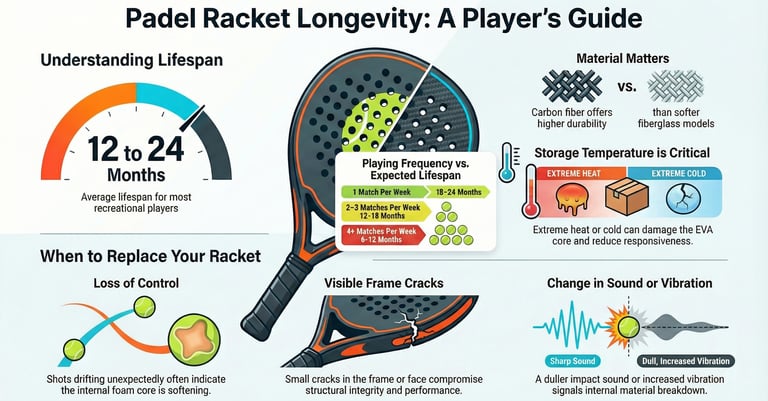
12 to 24 months
However, the real answer depends heavily on how often you play and how well you look after your equipment.
Advanced players who play regularly often replace rackets more frequently because performance changes become noticeable earlier.
Beginners, on the other hand, can often use the same racket comfortably for longer.
If you’re currently using a beginner-friendly model from our Best Padel Racket for Beginners guide, you’ll typically get at least a full season of reliable performance.
What Affects How Long a Padel Racket Lasts?
Several factors influence how quickly your racket wears out.
1. Playing Frequency
The more you play, the faster materials naturally degrade.
Even if the racket looks fine externally, the internal foam core slowly loses responsiveness over time.
Players who play multiple times per week may notice reduced control or power after about a year.
2. Racket Materials
Not all rackets are built the same.
Generally speaking:
Fibreglass rackets = softer feel but shorter lifespan
Carbon fibre rackets = more durable and longer-lasting
Beginner rackets often use more fibreglass because it improves comfort and forgiveness, but this can slightly reduce durability compared to advanced carbon models.
If you're unsure which material suits your level, our How to Choose a Padel Racket (Complete Buying Guide) explains the differences in detail.
3. Contact with Glass and Fencing
Padel is unique because the walls are part of the game.
That also means accidental contact with:
back glass
side glass
metal fencing
court floor
is common.
Occasional contact is normal, but repeated impacts can shorten racket lifespan.
This is especially true for newer players still developing positioning and timing.
4. Storage Conditions
Heat and cold both affect racket performance.
Avoid storing your racket:
in a hot car
in direct sunlight
in cold garages during winter
Extreme temperatures can damage the EVA core and reduce responsiveness over time.
Using a protective racket cover can significantly extend lifespan.
5. Playing Style
Aggressive players tend to wear rackets faster.
If your game involves:
frequent smashes
heavy spin shots
powerful volleys
your racket experiences more stress per session than a control-focused playing style.
Players using diamond-shaped rackets designed for power often replace equipment slightly earlier than those using control-focused round rackets.
Signs Your Padel Racket Needs Replacing
A racket doesn’t always break before it stops performing well.
Here are the most common signs it may be time for a replacement.
Loss of Control
If shots start drifting more than usual despite good technique, the internal core may be softening.
This is one of the earliest signs of wear.
Reduced Power
If smashes feel weaker than before, the racket may be losing rebound energy.
This happens gradually and can be difficult to notice at first.
Many players only recognise the difference after trying a newer racket.
Visible Cracks
Small cracks around the frame or face usually mean structural integrity is compromised.
Even minor cracks can affect performance and should not be ignored.
Excessive Vibration
If your racket suddenly feels harsher on contact, internal materials may be wearing down.
This can increase the risk of arm fatigue or discomfort during longer matches.
Sound Changes on Impact
Experienced players often notice a duller sound when striking the ball with an older racket.
This is another sign the core may be losing responsiveness.
Do Beginner Rackets Last Longer?
In many cases, yes.
Beginner rackets often last longer because:
rallies involve less power
players hit fewer smashes
contact is generally softer
They’re also designed with forgiveness in mind, which helps protect internal materials during off-centre hits.
If you’re currently using a round-shaped racket, you’ll likely benefit from both durability and control while developing your technique.
How to Make Your Padel Racket Last Longer
With proper care, you can extend your racket’s lifespan significantly.
Here are the most effective ways to protect your equipment.
Use a Protective Cover
Temperature protection alone can extend racket life by several months.
Many players underestimate how important this is.
Avoid Wall Contact When Possible
While walls are part of padel strategy, unnecessary impacts during defensive shots should be avoided where possible.
Improving positioning helps reduce accidental contact.
Our Padel Techniques & Shots Guide includes positioning tips that can help with this.
Don’t Leave It in the Car
Cars are one of the worst environments for racket storage.
Temperature swings inside vehicles can weaken internal foam over time.
Rotate Between Two Rackets (If You Play Often)
Regular players sometimes rotate between two rackets.
This:
spreads usage
reduces wear per session
maintains consistent performance longer
It’s a common habit among experienced club players.
Should You Replace Your Racket Every Year?
Not necessarily.
Most recreational players do not need to replace their racket annually.
Instead, replace your racket when:
performance noticeably drops
cracks appear
comfort decreases
control becomes inconsistent
If you’re still progressing as a player, upgrading your racket can also support improvement at the right stage.
Our Best Padel Racket for Beginners guide is a good starting point if you're considering your next upgrade.
Final Thoughts
Most padel rackets last between one and two years for recreational players, although this depends heavily on playing frequency, storage habits, and racket materials.
The key thing to remember is that rackets usually lose performance gradually rather than suddenly breaking.
If your shots feel less controlled, less powerful, or less comfortable than before, your racket may simply be reaching the end of its lifespan.
Looking after your equipment properly can extend its life significantly — and help you get the most value from every match you play.
Recommended for you
Best Padel Racket for Beginners


